Buyer’s Guide / Photo Plaques
Buyer’s GuideNot all photo plaques are the same. Depending on where the plaque will live, how detailed the image is, and the look you want — classic sculpted, crisp etched, or full-color — one method may fit better than another. Use this guide to compare the options and choose confidently.

Hand-Sculpted Dimensional Portrait
An artist sculpts the person’s image into clay from a photograph. Once you approve the sculpted proof, it is cast and attached to the plaque. Sculpting and proofing take about six weeks (sometimes up to ten), and casting takes about three weeks more. Because the artist recreates a person from a single photo, that photo should be the highest quality possible — poor photos give a less-than-perfect result, and artists can’t combine pictures or elements. The goal is roughly an 80% likeness. After the initial proof you’ll have a chance to request changes, so be as detailed as you can; we allow up to three proofs after the first, after which proof fees can be $75–$100 each. Starting over from scratch isn’t an option. Remember, this is an artist’s reproduction of a 2D image into a 3D one.

Fine-Line Monochrome
This is the most common way to add a photo to a plaque. It uses a technique similar to how newspapers print photos — lots of tiny dots to create shades — but instead of ink, acid etches the image into the metal for a realistic result. We alter the photo to remove the background and enhance it for the process, and we recommend a high-quality image with good contrast. For the quality and the ability to add a photo, the value is excellent.
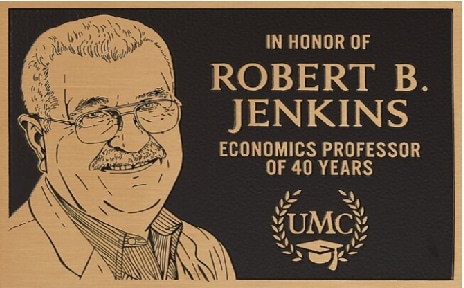
Raised Graphics from Simplified Art
Flat Relief captures certain elements of a photo to reproduce a person’s likeness in a 2D format. It needs a high-resolution photo with good contrast. Flattening the photo will affect the final result compared to the original — as you can see next to the BAS Relief example, this process may lose some of the photo’s character. Some photos give better results than others.
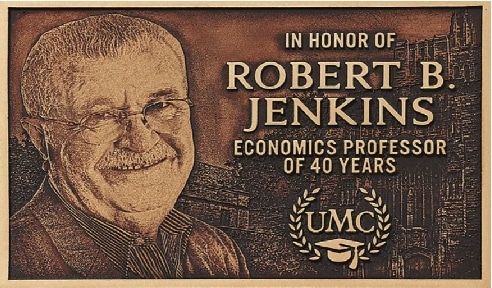
Cast Photo Image with Integrated Text
PhotoRelief uses a special process that lets you use a photo (or photos) to create a plaque with integrated text. The relief is subtle, but enough to give a likeness — an affordable, great-looking photo option. There’s no additional cost for the photo, since the entire plaque is priced as one piece including the image.
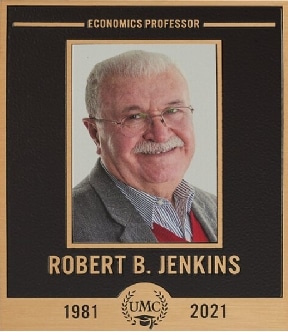
Full-Color, Direct-to-Metal
For the truest reproduction of a photo, UV printing applies special UV ink directly onto the plaque. It’s one of the least expensive photo options and the most forgiving on photo quality. Even though the ink is UV-cured, this print will fade in direct sun, so it’s best suited to indoor use or shaded, sun-protected outdoor spots. It comes with a 7-year warranty.
| Method | Appearance | Dimension | Fine Detail | Color | Best Use | Outdoor |
|---|---|---|---|---|---|---|
| BAS Relief | Sculpted portrait | ★★★★★ | ★★☆☆☆ | No | Memorials, dedications | ★★★★★ |
| Etched Photo | Monochrome, fine-line | ★☆☆☆☆ | ★★★★★ | No | Detailed portraits / buildings | ★★★★☆ |
| Flat Relief | Bold, graphic raised art | ★★★☆☆ | ★★★☆☆ | Optional accents | Crests, icons, readable at distance | ★★★★★ |
| Photo Relief | Cast photo image with text | ★★☆☆☆ | ★★★★☆ | No | Narrative / historical panels | ★★★★★ |
| UV Printed | Full-color, crisp graphics | ★☆☆☆☆ | ★★★★☆ | Yes | Indoor branding / donor walls | ★★★☆☆ (covered) |
Stars indicate relative levels versus the other methods on this page.
BAS Relief plaques feature hand-sculpted, fully dimensional portraits with lifelike depth. Flat Relief plaques are simplified, raised designs with bold shapes and minimal fine detail, for a clean, graphic appearance.
UV-Printed plaques give the truest photographic reproduction, in full color. For a realistic image rendered in the metal itself, Etched Photo captures the finest detail, and Photo Relief casts your photo directly into the plaque.
No. Etched photo plaques are monochrome, using tiny dots and lines to replicate shading in metal. They can, however, include painted backgrounds or color accents if desired.
Yes. Photo etching isn’t available in aluminum, so aluminum photo plaques use an etched stainless steel insert. Bas Relief, Flat Relief, and Photo Relief are also available in aluminum.
BAS Relief, Flat Relief, Photo Relief, and Etched Photo plaques are the most durable for outdoor use. They’re made from solid bronze, aluminum, or stainless steel and finished with protective coatings that resist weather and corrosion. UV-Printed plaques are best kept indoors or out of direct sun.
Submit a clear, high-resolution image (300 dpi or higher) for best results. For logos or text, provide vector artwork in AI, EPS, or SVG format. Our team can help adjust or retouch as needed.
Yes. All photo plaque types can include custom text, logos, and borders. The level of detail and color options depend on the method you select.
Choose BAS Relief for timeless sculpture, Etched Photo for the finest detail, Flat Relief for bold readability, Photo Relief for photos and text cast as one durable plaque, or UV-Printed for vivid color and indoor displays.
Send your image and tell us where it will live — we’ll recommend the best method and send a free proof.