Buyer’s Guide / Plaque Installation
Buyer’s GuideEvery installation site is different. Choosing the right mounting method — and installing it correctly — keeps your plaque secure, level, and looking good for decades.
Choose your mounting method when you order. For a side-by-side overview, see Mounting Options.
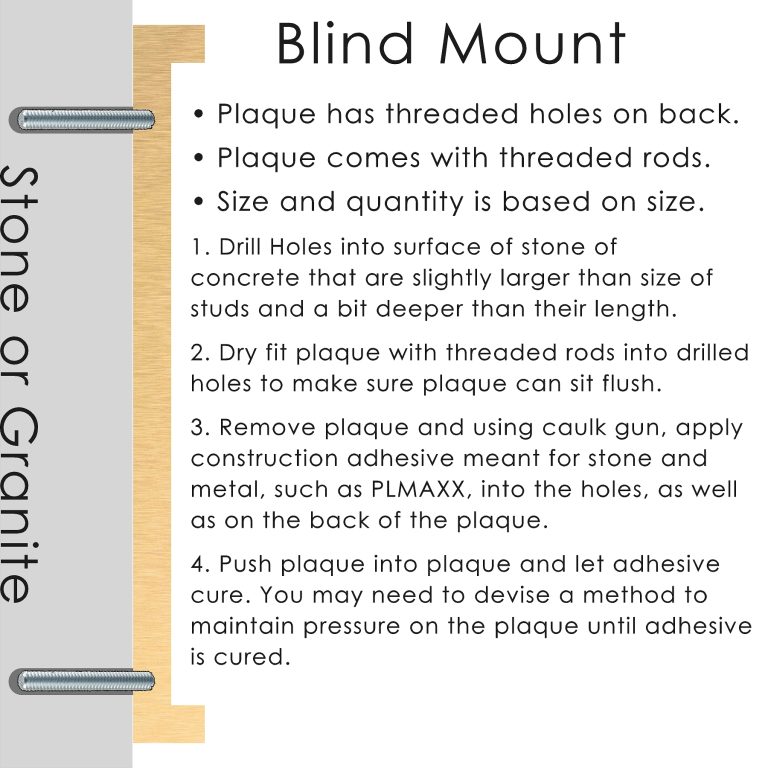

These steps apply to blind and solid wall mounts on stone, brick, or concrete.
Confirm the location, height, and alignment. Dry-fit first, and use the plaque itself as a template, with a level and painter’s tape to mark hole centers.
Use a masonry bit that matches your anchor or stud size, then clean all dust and debris out of each hole.
Use a high-quality exterior construction adhesive such as Loctite PL Premium Max. Apply it inside each drilled hole and on the back of the plaque around the mounting points.
Insert the studs or screws into the holes and press the plaque firmly against the surface. Check that it’s level before the adhesive sets, and wipe away any squeeze-out.
Follow the adhesive manufacturer’s cure time before putting any load on the plaque. Don’t move or adjust it once it’s set.
Never mount directly on stucco. The minerals and moisture in stucco can damage metal finishes over time. Always use separating spacers so air can circulate between the plaque and the wall.
Inspect the mounting points every few months, especially on outdoor plaques exposed to wind, moisture, or freeze-thaw cycles. Tighten or reinforce hardware as needed. For cleaning the plaque itself, see Bronze Plaque Cleaning.
A blind mount uses hidden studs on the back of the plaque that set into drilled holes in stone, brick, or concrete. Choose it when you want a clean look with no visible screws.
Inside each drilled hole and on the back of the plaque around the mounting points. Wipe away squeeze-out, and let it cure fully according to the adhesive manufacturer’s instructions.
Yes. Masonry anchors hold the screws, and a small amount of construction adhesive in each hole and across the back of the plaque improves pull-out resistance and overall stability.
No. Use separating spacers so the plaque sits off the stucco surface. This protects the finish over the long term.
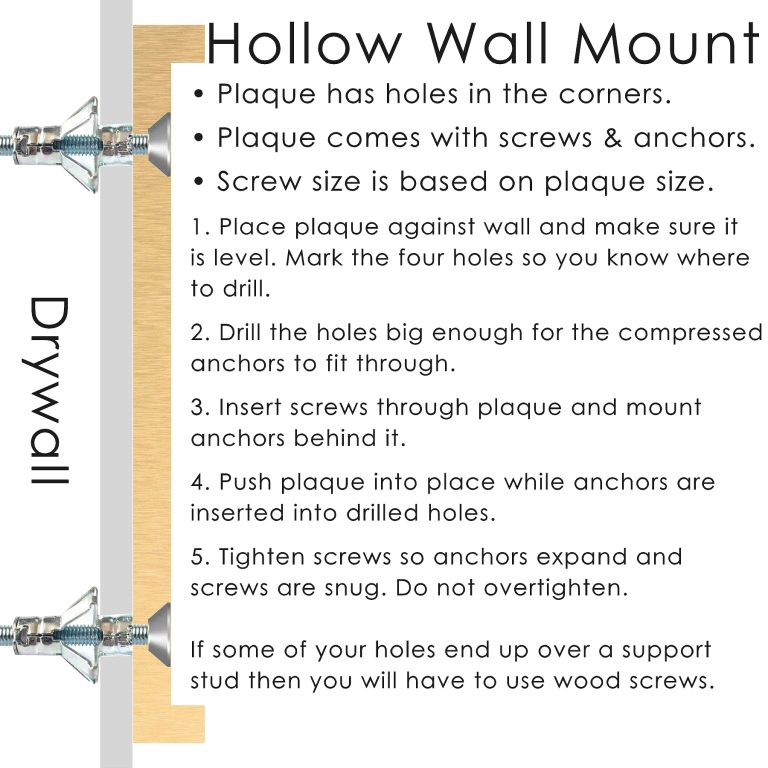
Toggle or expansion anchors rated for the plaque’s weight. Hollow wall mounts are best for indoor use, and you should avoid overtightening.
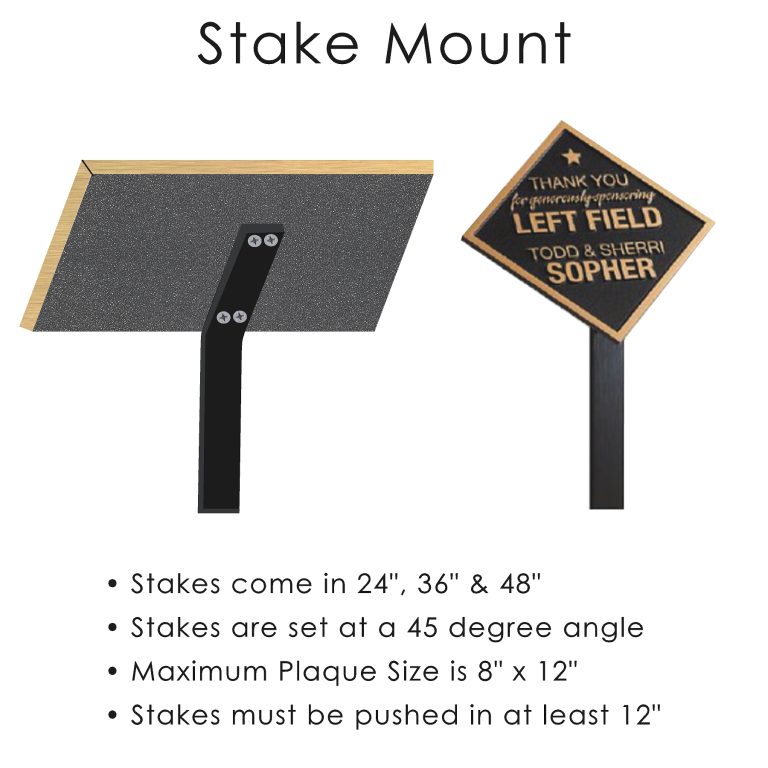
24″, 36″, and 48″. Push stakes at least 12″ into the ground. Stake mounts suit plaques at least 4″ tall, up to about 8″ × 12″.
For freestanding outdoor displays and plaques at least 8″ tall. Posts come in 1″, 1-1/2″, and 2″ square sizes, in 6′ or 8′ lengths.
Follow the adhesive manufacturer’s instructions, and don’t load or disturb the plaque until the adhesive reaches handling strength. Full cure can take longer depending on temperature and humidity.
Tell us what surface the plaque is going on, and we’ll recommend the right mounting before we make it.